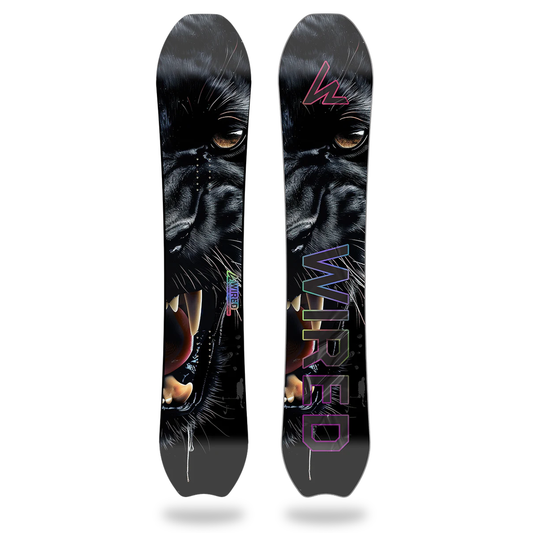
Freeride snowboards: for when the mountain gets serious
Freeride is snowboarding at its most honest. No park features to cushion a mistake, no groomed corduroy to iron out your technique. Just the mountain as it actually is, variable, steep, unpredictable, and completely unforgiving if you show up with the wrong setup. A freeride board is not for everyone. It is for the rider who has put in enough time on the mountain to know what they want from it, and who wants a board built to match that ambition. The freeride category has always occupied a specific place in snowboard culture. It is where the sport's roots live. Before halfpipes, before rails, before park culture took over the magazines, snowboarding was about finding the steepest, deepest, most consequential line on the hill and committing to it. That spirit never went away. It just moved off the groomed runs and into the parts of the mountain you have to earn.
What separates a freeride board from everything else
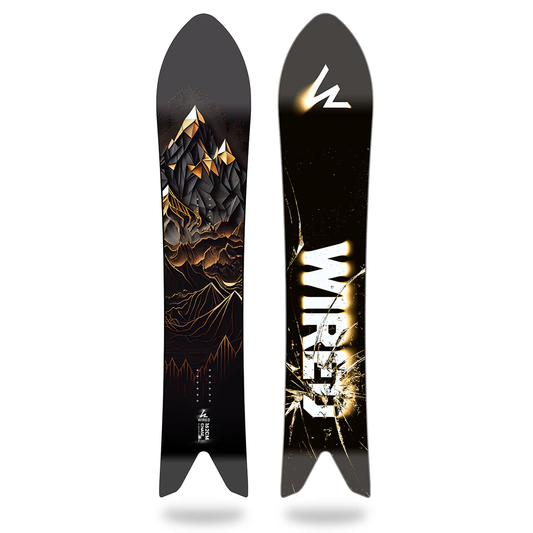
Shape is the most obvious difference. A freeride snowboard is directional, built to travel one way with intention. The nose is noticeably longer and wider than the tail, which gives the board float in powder and drives it forward with authority. The tail is shorter and stiffer, so it releases cleanly when you need to initiate a turn on a steep pitch and holds its edge when the terrain demands it. The stance is set back from centre, sometimes slightly, sometimes aggressively depending on how deep into freeride territory the shape sits. That setback keeps the nose riding above the snow rather than ploughing through it, which is the difference between floating through a powder field and fighting it. Camber profile on a freeride board tends to lean toward full camber or a hybrid that keeps camber underfoot for edge hold and grip. Rocker in the nose is common and useful, lifting the tip out of the snow so the board planes rather than dives. The tail stays cambered or flat, depending on whether the board is designed for precise carving on hard snow or a more surfy, playful feel on softer days. Stiffness is higher than a freestyle board and often higher than a standard all-mountain shape. A freeride board needs to hold its composure at speed, absorb the impact of uneven snow without deflecting, and give the rider confidence on the kind of terrain where losing control has real consequences. That requires a stiffer flex, a denser core construction, and a layup that prioritises stability and energy transmission over forgiveness.
What good freeride construction actually looks like
The core is where it starts. Freeride boards typically use denser wood cores, sometimes with mixed species to tune stiffness and flex patterns across different zones of the board. Poplar and paulownia combinations are common for their balance of weight and strength. Carbon or Kevlar reinforcements are used selectively to add torsional stiffness and snap without making the board feel dead or heavy. Sintered bases are non-negotiable at this level. A freeride board covers distance, often at speed on varied terrain, and a sintered base holds wax better, absorbs it more deeply, and maintains speed longer than an extruded base. Over the course of a full season of serious riding it makes a noticeable difference. Edge construction matters more than most riders realise. On steep, hard-packed snow, the edge is everything. Boards with full wraparound edge construction and reinforced tip and tail protection hold up to the impacts that freeride terrain delivers. A delaminated tip or a cracked edge on a serious run is not just inconvenient.
Freeride is a commitment, and so is the brand behind the board
The best freeride boards come from brands that understand the terrain they are building for, not just the category name. There is a big difference between a brand that makes a directional board and calls it a freeride shape, and a brand that has spent years developing shapes specifically for variable snow, steep pitches and the physical demands of serious mountain riding. The brands we carry in this collection are chosen because they sit firmly in the second camp. Independent labels, real freeride pedigree, boards designed with specific intent rather than range-filling logic.

 Sale
Sale Sold out
 Sale
Sale
 Sale
Sale