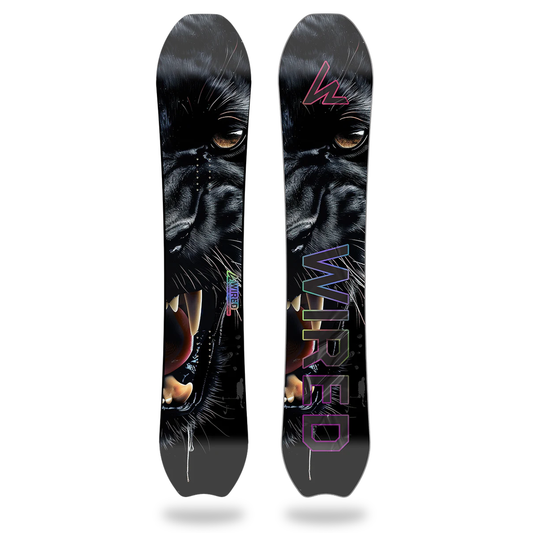
All-Mountain Snowboards: One Board, the Whole Mountain
The all-mountain snowboard is the most honest board category in snowboarding. No niche excuses, no single-terrain get-out clause. You put it on the mountain, and it has to perform. Groomers, slush, a surprise powder stash off the side of a groomed run, a natural kicker at the bottom of a tree run, a long flat cat track you didn't see coming. The all-mountain board handles all of it, or it doesn't earn the name.
That's a harder brief than most riders realise, and it's why picking the right one matters more than people think. The all-mountain category is also, unfortunately, the most crowded shelf in any snowboard shop. Every brand makes one. Most of them are fine. A few of them are genuinely good. We carry the ones worth riding.
What Makes a Good All-Mountain Snowboard
The shape and profile is where it starts. A directional twin is the workhorse of the all-mountain category: a slightly longer nose than tail for float and directional drive, but enough symmetry to ride switch without fighting the board. Pair that with a medium or multi-camber profile and you get edge grip when you want it, forgiveness when you need it, and enough pop underfoot to keep things interesting.
Flex matters too. The all-mountain sweet spot sits around a medium flex, roughly a 5 to 7 out of 10 depending on the brand's scale. Too soft and the board gets loose at speed and washes out on hardpack. Too stiff and it punishes you on variable snow and punishes your knees by the end of a long day. That middle ground is harder to nail than it sounds, and the brands that get it right have usually put real time into understanding how the board behaves across different conditions, not just in ideal ones.
Construction quality separates the boards that last from the ones that don't. A quality all-mountain board wants a poplar or mixed wood core for lively flex and durability, triaxial or biaxial fibreglass layup for strength and energy transfer, and a sintered base that holds wax and holds speed over the course of a full season. Carbon reinforcement, where it appears, should be there to add snap and responsiveness rather than just to justify a price tag.
The Boards in This Collection
The all-mountain snowboards we stock are chosen by riders, not algorithms. Every board in this collection has earned its place based on construction quality, on-snow performance across varied terrain, and the credibility of the brand behind it. These are not safe, middle-of-the-road picks designed to appeal to everyone. They are boards we would ride ourselves, from labels that take the all-mountain category seriously.
The brands you find here tend to fly under the radar at mainstream retailers. That is not a coincidence. We specifically seek out independent and niche labels that bring something genuine to the category, brands that have spent real time developing their shapes and construction rather than refreshing colourways and reusing last season's tooling. If you can find it at every sports chain in Europe, it probably is not on these pages.
How to Pick the Right All-Mountain Snowboard for you
Start with where you actually ride. If 70% of your days are groomers with occasional off-piste excursions, a directional twin with a medium flex and multi-camber profile will cover everything without making any part of your riding feel compromised. If your mountain has consistently good off-piste and you spend real time in variable and untracked snow, lean toward the more directional end of the all-mountain category, a slightly longer nose and a profile with more camber underfoot for edge hold at speed.
Size is the other variable that matters. The trend toward shorter boards has been real, but an all-mountain board ridden too short will lose stability at speed and wash out in powder. A rough starting point is a board that comes up somewhere between your chin and your nose when standing upright, with adjustments for weight, riding style and the terrain you ride most. Heavier riders and more aggressive styles push the length up. Park-heavy all-mountain riders can typically go shorter.
If you are not sure, just ask. This is exactly the kind of question we are here to answer.
Why Board Sports for Your All-Mountain Snowboard
We do not carry twenty all-mountain snowboards. We carry the ones that are worth it. The brands in our collection are chosen because we believe in what they build, not because they're easy to stock or because they offered us the best margin. Most of them you won't find at the big online retailers or the chain sports stores, and that's by design.
This is the all-mountain category for riders who want to know what they're buying and why. No fluff, no filler. Just boards that work.

 Sale
Sale Sold out
 Sold out
 Sale
Sale